Corn on the cob curry 

A really simple, mild but full of flavour curry. Served on a bed of brown rice.

My daughters don’t enjoy hot and spicy food but this curry goes down very well indeed.

The blend of peanuts and yoghurt ensure a creamy sauce that coats the accompanying rice well.

Serves 4

Ingredients:

4 corn on the cob – chopped in half and then split length ways

50 g gram / chickpea flour         3 tbsp groundnut oil

1 450 g carton of Greek yogurt

250 g unsalted peanuts – ground

1 tsp turmeric

1 tsp chilli powder

500 ml water

Method:

Cook the prepared corn on the cob in boiling water for 6-8 minutes. Drain.

On high, heat the oil in a frying pan and add the flour – stirring continuously for a couple of minutes. Turn the heat down to a moderate temperature and add the ground peanuts, Stir for a coupe of minutes. Add the yoghurt, turmeric and chilli and stir till mixed thoroughly.Slowly add the 500 ml of water stirring all the time to create a thick sauce. Add the corn on the cob and simmer until all heated through.

Serve on a bed of warm rice.

Cranberry salsa

I think the finest meal is one where you have the opportunity to have a multitude of different flavour combinations – probably why I love a roast dinner with all the extra trimmings.

A barbecue is one such opportunity – a plate can be laden with a multitude of little bits of this and that.

This is one such dish.

20160723_165653

Ingredients:

1 large white onion – finely chopped             Zest and juice of 2 limes

1 large green pepper – finely chopped          600 g of cranberry sauce

Mint – large handful chopped          Coriander – large handful chopped

Method:

Put all the ingredients in to a large bowl and combine thoroughly.


This salsa is perfect with meat, fish and salads – an all round great accompaniment.

I put the salsa in to the empty cranberry sauce jars. It will last for at least a week in the fridge (if not devoured beforehand!)

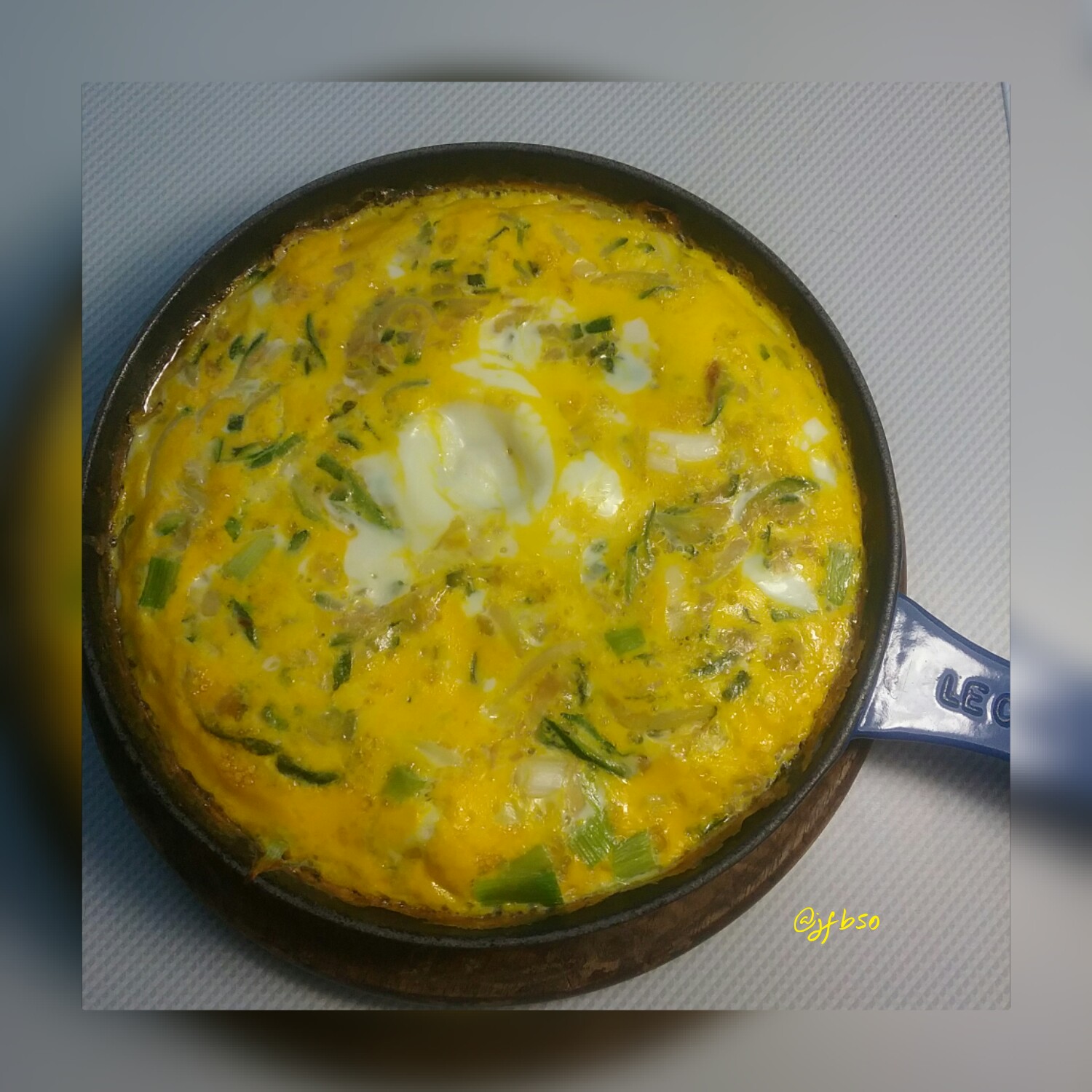
Courgetti, spring onion and cheese frittata 

Perfect for a light supper on a hot summer’s day 🙂 . The wonderful thing about this dish is that it is delicious both hot and cold.

The number of servings depends upon what is served with the dish – serves 2 if on its own or with a small salad or 4 if served with additional vegetables and new potatoes. Gas mark 5 / 190 c   Oven proof pan

Ingredients:

1 spiralised courgette                      6 eggs – beaten and seasoned with pepper

2 spring onions finely chopped         handful of grated cheese    olive oil for frying

Method:

Gently fry the courgetti and onions for a couple of minutes. Add the grated cheese and beaten egg. Put the pan in the oven for 10 – 15 mins until the frittata is just set.


Guacamole 

The perfect companion for a chilli con carne.

Serves 2

Ingredients:

1 large ripe avocado – coarsely chopped

10 plum tomatoes – finely chopped

4 spring onions – finely chopped

Juice of half a lemon

3-4 drops of tabasco sauce

Method:

Put all the prepared ingredients in to a bowl and mix gently.


Smoked mackerel and rice noodles

image

Serves 3    Preheat oven to 180c / gas mark 4

Ingredients:

1/2 butternut squash deseeded and chopped in to small chunks

plum / cherry tomatoes

3 smoked mackerel fillets torn into large pieces

300 g rice noodles

rocket

tamari (soy sauce if non gf)

Olive oil

Method:

Put butternut squash on a baking tray and drizzle with olive oil. Roast in oven for about 30 mins until cooked and edges crisping.

Put a drizzle of olive oil in a frying pan and, once hot, add the rice noodles. Stir for a minute. Add the tomatoes and fry for a further minute. Drizzle with tamari. Add the fish and heat through. Finally add the roasted squash, stir  and serve on a bed of rocket.

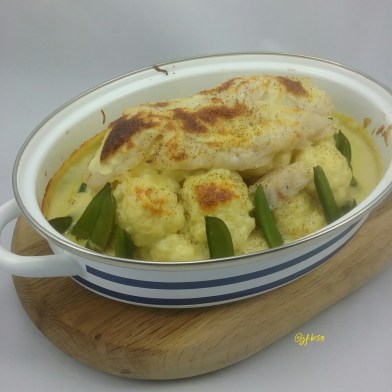
Hake, mangetout and cauliflower cheese bake

wp-1467225609720.jpg

Oven to tableware dish from Prestige

Such an easy dish to prepare:

Serves 3    Pre heat oven to 180C Gas mark 4

Ingredients

For the cheese sauce:

350 ml Full / semi skimmed milk            80 g  Cheddar / Double Gloucester cheese – grated

20 g Butter                                                       30 g gluten-free plain flour

1 tsp English mustard

For the remainder of the dish:

1 cauliflower cut in to 3 chunks             1 skinned fillet of hake    1 handful of mangetout

15 g grated cheese

Method:

Place the hake fillet within a tin foil parcel and bake in the centre of the oven for 10 mins.

Put the cauliflower in a pan of boiling water and cook until for 8- 10 mins.(alternatively steam e.g Prestige pressure cooker 5-8 mins) and boil /steam the mangetout for 3 mins.

For the cheese sauce:

Melt the butter in a saucepan.

Stir in the flour

Gradually add the milk – stirring continuously.

Simmer gently  and add the mustard and then the grated cheese, stirring until all melted and thoroughly combined.

Simply assemble all the ingredients in an oven proof dish, top with grated cheese and put in the oven to heat through thoroughly.

Carbohydrate -friend or foe?

I have really tried to change my view of carbohydrate over the last year. I always believed it to be my foe, my nemesis even, and would try and avoid it like the plague. Each day I would try to keep my intake to below 50 g – 60 g a day – 200 -240 kcal of carbs a day. Each day I would mentally beat myself up if I hadn’t achieved this.I always felt that carbs were the reason I would put weight on and when I severely restricted them…the weight came off. Then I started to think more logically:

I need carbs for my energy needs; I can control the types of carbs I eat.

Government guidelines presently state 50-55% of daily food intake should be carbs – of that 45% complex starchy carbs and non-starchy polysaccharides – fibre and no more than 5% from free sugars. (I know this guideline has been challenged recently because of the rise of obesity – but it is all about eating the right carbs – eating carbohydrate is not just about eating white bread, pasta and potatoes!) The healthy high carb foods I eat include vegetables,legume, whole grains, nuts and berries / low fructose fruits. I avoid unhealthy carbs.

This thought process has enabled me to take back control – with careful food choices I can ensure I give my body sufficient energy sources for its needs. Intake of carbs from refined foods will have a totally different effect on my body than if I get all my  carbs from unrefined foods…in other words …if I cook from scratch, opt for foods high in fibre and with a low GI, and just eat real foods I will be eating ‘properly’ and giving my body the nutrition it needs. So this is what I do 🙂

Doing this, and keeping my free sugars to below 5% of my daily intake has improved my health, ensured any excess weight has come off and means I don’t have blood sugar spikes during the day and crave snacks in between meals…and counting calories is a thing of the past!


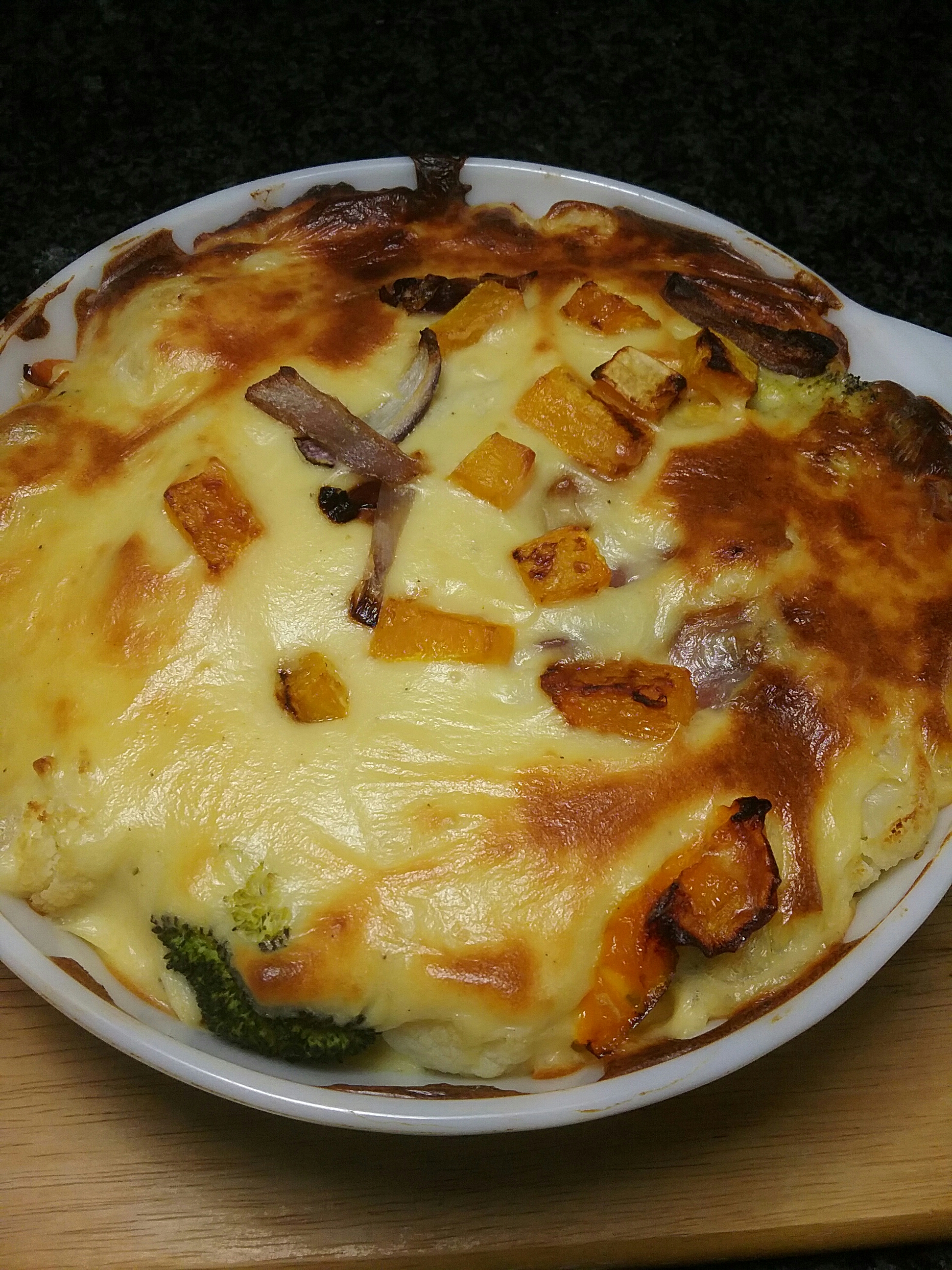
Vegetable bake

imageIngredients:

1/2 butternut squash de seeded and cut in to cubes

1 red onion sliced in to large chunks

1 yellow pepper de seeded and cut in to large pieces

Broccoli and / or cauliflower

Coconut oil

Butter

Milk

Gluten free plain flour

Cheese e.g. cheddar – grated – some for sauce and some to sprinkle on top

Method:

Prepare the squash, onion and pepper. Drizzle with coconut oil and roast in hot oven until cooked – about 35 minutes. Cut the broccoli and cauliflower into large florets and steam until cooked – but firm.Drain thoroughly. Make the cheese sauce with the butter, flour, milk and cheese. Assemble all the cooked vegetables in an oven proof dish and pour the cheese sauce over the top. Sprinkle the remaining grated cheese over the top and bake in a hot oven until hot throughout and golden brown with a crisped cheese top.

I eat it on its own. My husband like to have it with a couple of rashers of grilled bacon placed over the top.

Lemon and rosemary infused quinoa stuffed peppers

image

Cup full of quinoa washed thoroughly and cooked. Whilst hot squeeze juice of 1 lemon into it and add 2 cubes of rosemary frozen in olive oil – or a sprig of fresh rosemary. and a dash of olive oil. (I put any leftover fresh herbs in to ice-cube trays and cover with olive / coconut oil and then freeze)

Cut the peppers in half and deseed. Roast for about 10 minutes and then stuff with the quinoa mixture and put back in the oven to roast until the peppers are cooked.

I served this dish with cayenne and olive oil roasted sweet potato and butternut squash chunks (neither peeled) and a chunk of corn on the cob.


Superfood

I have been pondering a couple of thoughts this week and haven’t yet come up with an answer…any thoughts / ideas etc. gratefully received.

The first notion meandering about my brain is that of superfoods. I had just #superfood for one of my instagram postings and it got me thinking. The hashtag was for kale – the latest superfood. When does a food become a superfood? Who decides? What is the criteria. If I think about kale – I used to eat it all the time when I was little. Then, it wasn’t a superfood – just another vegetable on the plate eaten in the same way as Savoy cabbage. As far as I am aware it hasn’t been genetically modified in any way so why the relabelling? The same with avocados. In the 80’s trendy ‘hippie’ types, as my elderly aunt would call people who ate anything that wasn’t meat and two veg, ate the new fruit – avocado. I distinctly remember putting the ‘pear’ in a fruit salad and being deeply disappointed. I also remember the trend of suspending the stone in some water and growing an avocado plant – I grew several. It then went out of fashion for being too calorific.  and full of fat as the low-fat diets swept the country. Now of course we know that the fat within this food is good for us.  I adore avocado and eat/ drink it daily.

The other thought entwining my grey matter is that of recommended daily intake – food agencies determine using scientific evidence the recommended daily intake of various food stuffs. What I don’t understand is that the daily recommendations vary for different countries…but we are all people just living in different places. The UK recommends at least 5 portions of fruit/veg a day whereas the Australian Government guidelines are 5 portions of vegetables / legumes a day and no more than 2 portions of fruit. It’s different again in Japan – 5-6 portions of vegetable dishes and only 2 portions of fruit.

How can we mere mortals hope to keep up if the facts are always changing?